For many of our veterans, transitioning from military to civilian life isn’t as difficult as the transition into their senior years. Veterans often face a set of unique challenges that others don’t. This includes physical limitations as well as chronic conditions related to their years of service. Veterans want to be independent, but sometimes, in order to stay safe and healthy, they have to reach out for help.
Reliant’s in-home veteran care is designed to help bridge the gap between living fully independently and moving to a care facility. It allows your veteran loved one to remain in their own home for as long as possible while receiving care tailored to their unique needs. We follow your loved one’s routine while providing care with dignity and respect. Let’s take a look at what in-home care looks like for veterans, signs that it’s time to reach out for help, and how to navigate in-home care options.

What Is In-Home Veteran Care?
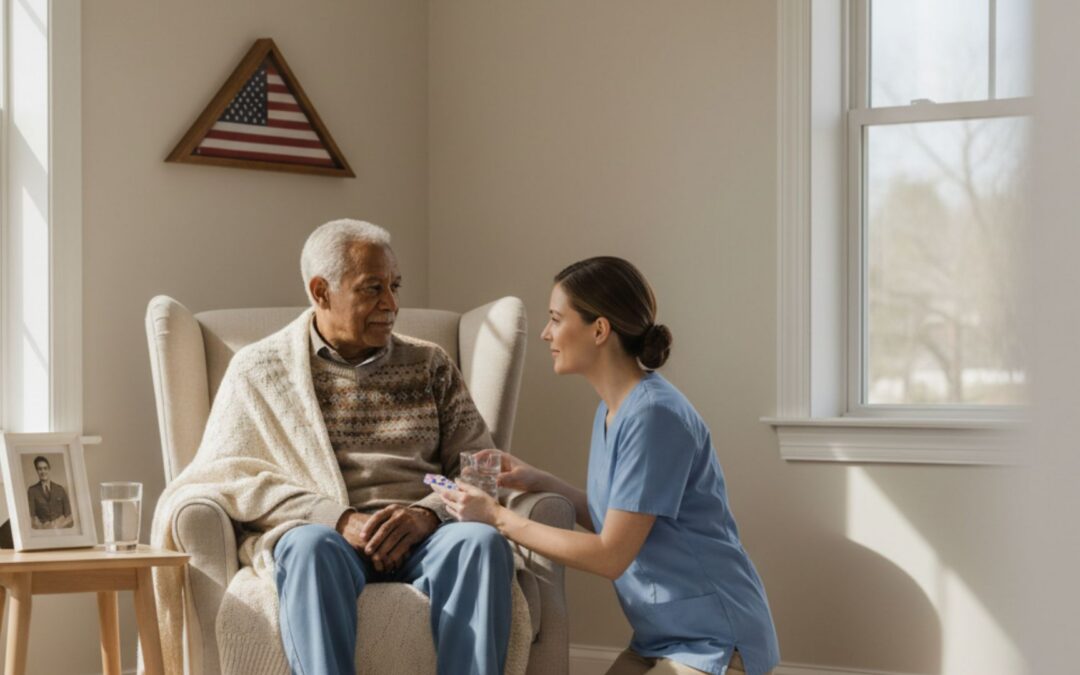
In-home veteran care is a form of non-medical, supportive care provided at your veteran’s home. It focuses on allowing your loved one to remain living independently while getting the help they need performing activities of daily living, taking medication, and more.
Who is it for? In-home veteran care is ideal for aging veterans who want to live at home rather than move into a care facility. It can also be very helpful for those recovering from surgery or who need short-term help after an injury. Those who are struggling with chronic conditions, whether they’re physical or mental, can also benefit from in-home care. Finally, family caregivers aren’t forgotten – respite care can be ideal for those who need a break.
Common Challenges Veterans Face as They Age
Aging is a complex process for everyone, but veterans often face additional emotional and physical complications from their time in the service. These can include everything from missing limbs to PTSD, which is why senior veteran care needs to be specifically tailored to the individual. Here are some common challenges veterans face:
- Fall risks from injuries or neurological changes
- Mobility challenges
- Chronic pain and limited range of motion
- Difficulty performing activities of daily life such as bathing and dressing.
- Forgetting to take medication as directed
- Becoming socially isolated, especially those who cannot drive or walk long distances
- Memory challenges from dementia and Alzheimer’s
- Transportation barriers for those who cannot drive
- Mental health challenges, including PTSD.
What Services Are Typically Included in Veteran In-Home Care?
When you work with Reliant or veteran home care services, we’ll work with you to create a custom care plan that touches on a number of services:
Personal Care Support (ADLs)
This is the most hands-on type of care. It includes helping with bathing, dressing, and grooming. It may also involve toileting assistance as well as help transferring from a bed to a wheelchair or walker.
Daily Living Support (IADLs)
Support with daily living tasks includes anything that helps keep the home running smoothly. It may include meal planning and preparation, light housekeeping, laundry, and even running errands or doing the grocery shopping.
Emotional Support
For many veterans, the social interactions they get with their caregivers make up the majority of all social interactions they have. These conversations help those who are undergoing cognitive changes and provide emotional support.
Safety & Routine Support
It’s easy to become used to how things are or what your loved one’s home looks like, but this can mean that you miss things that could impact their care. A caregiver acts as a second set of eyes and may see trip hazards and other issues that you haven’t.

Signs It Might Be Time to Consider In-Home Care for a Veteran
It’s not always easy to tell when it’s the right time to bring in professional support. Often, family caregivers continue to provide care, but a care provider steps in a few times a week or month. As things progress, or if your situation changes, these care providers may be needed daily. Everything with in-home care is designed to be flexible because no two situations are the same.
Here are a few signs that it’s time to reach out to Reliant:
- Your loved one has recently fallen or had a near-fall.
- Your loved one’s hygiene has declined. They may no longer be bathing or may wear the same clothing for days.
- Your loved one has noticeably lost weight.
- There are signs of home upkeep issues, such as unopened mail, overflowing trash, etc.
- Your loved one becomes withdrawn, irritable, or shows other mood shifts.
- You find safety issues, such as the stove being left on or doors being unlocked.
- You, as the primary caregiver, are starting to show signs of burnout.
Why In-Home Care Can Be Especially Valuable for Veterans
Veterans often want to be independent and maintain their pride. Many of them do not like the idea of moving into a care facility, and some even resist help. However, in-home care can allow veterans to remain at home and mostly independent in a number of ways:
- Staying in their home, a familiar environment, helps reduce stress that can be brought on by moving to a new place.
- Veterans can continue following their daily routine surrounded by their favorite things.
- In-home care provides one-on-one attention, something they may not get in a care facility.
- In-home care provides support for the entire family, which can help improve relationships and reduce stress.
How to Pay for Veteran Home Care
The financial side of veteran care is often a big hurdle for families. Most care is paid for in one of three ways:
- Private pay: This is the most common option, but it does mean you, your loved one, and your family cover all of the costs.
- Long-term care insurance: If your loved one has a long-term care policy, it likely covers at least some in-home care. The amount and type of care vary from policy to policy.
- VA benefits: Some VA programs, such as VA Aid and Attendance, provide a monthly pension to help cover the cost of in-home care.
It is important to remember that VA benefits do depend on how long your loved one’s service and on their medical needs. You may need to contact your local VA office to learn more about the benefits they qualify for.
How Reliant Home Care Services Supports Veterans at Home
We believe in care that honors your loved one’s service while allowing them to be as independent as they can (and want) to be. There is no one-size-fits-all form of veteran in-home care. We work closely with you and your loved one to create a personalized care plan that respects your loved one’s history while also addressing their current needs.
Our approach includes:
- Flexible scheduling. Whether you need us for a few hours of respite care a week or daily support, we’re here for you.
- Caregiver matching. We will pair your loved one with a caregiver who has the skills needed to address all of your loved one’s needs.
- We keep families in the loop, so you will always know how your loved one is doing.
Getting Started: What Families Can Do This Week
Transitioning to a professional in-home caregiver doesn’t happen overnight. Instead, we recommend you start with these simple steps:
- First, make a list of everything your loved one will need, such as bathing, meal preparation, transportation to appointments, etc.
- Next, identify the gaps. When are you most stressed? It might be a time of day, such as the morning, or a specific day of the week or during certain parts of the month/year.
- Reach out for an assessment. We will discuss what your loved one needs and how we can help.
You can start small. Having a caregiver come for a few hours a week will let you see how the process works and allow your loved one to get used to it.
If you’re ready to learn more, contact Reliant Home Care Services today.
